Begriff: Klimaruck
Wenn der Klimawandel nur ein gewöhnlicher 'Wandel' über 10.000 von Jahren wäre, so wie ihn die Erde schon mehrfach erlebt hat, dann gäbe es kein Problem für uns.
Aber: Der in den letzten 200 Jahren in unser Ökosystem zusätzlich eingebrachte fossile Kohlenstoff, hat zu einer ruckartigen Veränderung der Atmosphäre geführt, die keinen langsamen Wandel herbeiführt, sondern eine plötzliche und fundamentale Störung unseres aktuellen Ökosystems verursacht.
- Ein sich im Gleichgewicht befindliches System, wie das Ökosystems unserer Erde, ist relativ stabil. Arten erobern nur langsam neue Gebiete, Pflanzen wachsen dort wo sie die besten Bedingungen haben, die Landwirtschaft pflanzt das an, was vor Ort den besten Ertrag erbringt.
- leben Tiere auch plötzlich an für ihr Überleben nicht optimal angepassten Orten und ziehen um oder sterben.
- leben andere Tiere auch plötzlich an für ihr Überleben besser angepassten Orten und vermehren sich exponentiell.
- wachsen Pflanzen auch plötzlich an für ihr Überleben nicht optimal angepassten Orten und gehen ein.
- wachsen andere Pflanzen auch plötzlich an für ihr Überleben besser angepassten Orten und vermehren sich exponentiell.
- pflanzt die Landwirtschaft auch plötzlich an für die Produktion nicht optimal angepassten Orten und es gibt weniger Nahrung.
- leben Insekten auch plötzlich an für ihr Überleben nicht optimal angepassten Orten und ziehen um oder sterben.
- leben andere Insekten auch plötzlich an für ihr Überleben besser angepassten Orten und vermehren sich exponentiell.
- wachsen Schimmelpilze auch plötzlich an für ihr Überleben nicht optimal angepassten Orten und gehen ein.
- wachsen andere Schimmelpilze auch plötzlich an für ihr Überleben besser angepassten Orten und vermehren sich exponentiell.
- können Schädlinge (Insekten, Käfer, Pilze, Schimmelpilze, Krankheitserreger, Algen, .. ) auch plötzlich an neuen Orten bessere Bedingungen vorfinden, und z.B. unsere Ernten, unser Wälder oder unsere Seen und Gewässer übermässig befallen und zerstören.
Achtung: Gleichgewicht bedeutet nicht, dass alles 'schön' ist, sondern nur dass es zuverlässig z.B. immer 48 Grad im Sommer in Deutschland wird, oder normal ist dass es z.B. Stürme mit >300km/h gibt. Bis dahin kann es zu unvorhergesehenen Abweichungen kommen auf die man sich nur schwerlich vorbereiten kann .. mal ein Jahr 50 Grad, das Jahr drauf Dauerregen bei 10 Grad, und das Jahr drauf wieder Dauerfrost .. alles ist in einem gestörten komplexen System möglich.
Im weltgeschichtlichen Zeitverlauf liegt der Klimaruck viel näher an einem kurzen Ereignis wie einem Meteoriteneinschlag als an einem langsamen Wandel über 10.000 Jahre. Entsprechend sind die Auswirkungen auch eher mit einem solchen Einschlag vergleichbar.
Begriff: Klimakatastrophe
Nicht 'Unwetter', sondern alle Folgen der schnellen Erwärmung um 2-3 Grad:
- Gewässer kippen um (z.B. durch übermässiges Algenwachstum in Hitzperioden)
- Ernten werden zerstört (z.B. von ortsfremden Insekten oder Hitzewellen)
- Wälder sterben ab (z.B. Käfer, Schimmel oder Grundwasserabsenkungen)
- Ortsfremde Tierarten übertragen Krankheiten (z.B. Malariamücke)
- Pandemien (Veränderungen im Ökosystem fördern Mutationen)
- Lieferketten werden gestört wenn in Exportländern z.B. Ernten ausfallen oder Kraftwerke abgeschaltet werden müssen
- Strompreise explodieren wenn Kraftwerke abgeschaltet werden müssen (z.B. wegen überhitzter Flüsse oder fehlender Energiepflanzen)
- Renten werden nicht mehr bezahlt (Sozialvertrag gekündigt)
- Nahrungsmittel werden viel teurer wenn Ernten geschädigt werden
- Milliarden Menschen hungern und flüchten (sobald die ersten grossflächigen Ernteausfälle eintreten) - entweder kommen diese zu uns, oder wir sind selber auf der Flucht..
Fakten vs. Meinungen
Fakten:
- Dass die Klimakatastrophe viele Millionen Menschen umbringt oder foltert ist Fakt. (IPC Bericht)
Menschen argumentieren mit 'Rezession', 'Wirtschaftseinbruch' und dergleichen, wenn wir jetzt alle Kohlekraftwerke abschalten.
Dazu kann man verschiedene Meinungen haben:
- Wir foltern und töten 100 Millionen von Menschen (das ist etwa der verschuldete Anteil Deutschlands), um eine 10- bis 20-Jährige Rezession ein paar Jahre aufzuschieben.
- Wir rüsten militärisch auf, um in den durch uns verursachten Klimakriegen die Oberhand zu behalten und töten noch mehr Menschen. Am Ende werden aber alle unterliegen und die Rezession wird zwar um wenige Jahre aufgeschoben, dann aber noch viel stärker und schlimmer sein. Diesen Krieg kann man nicht gewinnen.
- Wir schalten jetzt alle Kohlekraftwerke ab, und versuchen die Klimakriege von vorn herein zu verhindern. Eine Rezession ist ein vergleichsweise geringes Übel und langfristig auch für die Wirtschaft viel vorteilhafter als ein Totalcrash.
Der CO2-Kreislauf
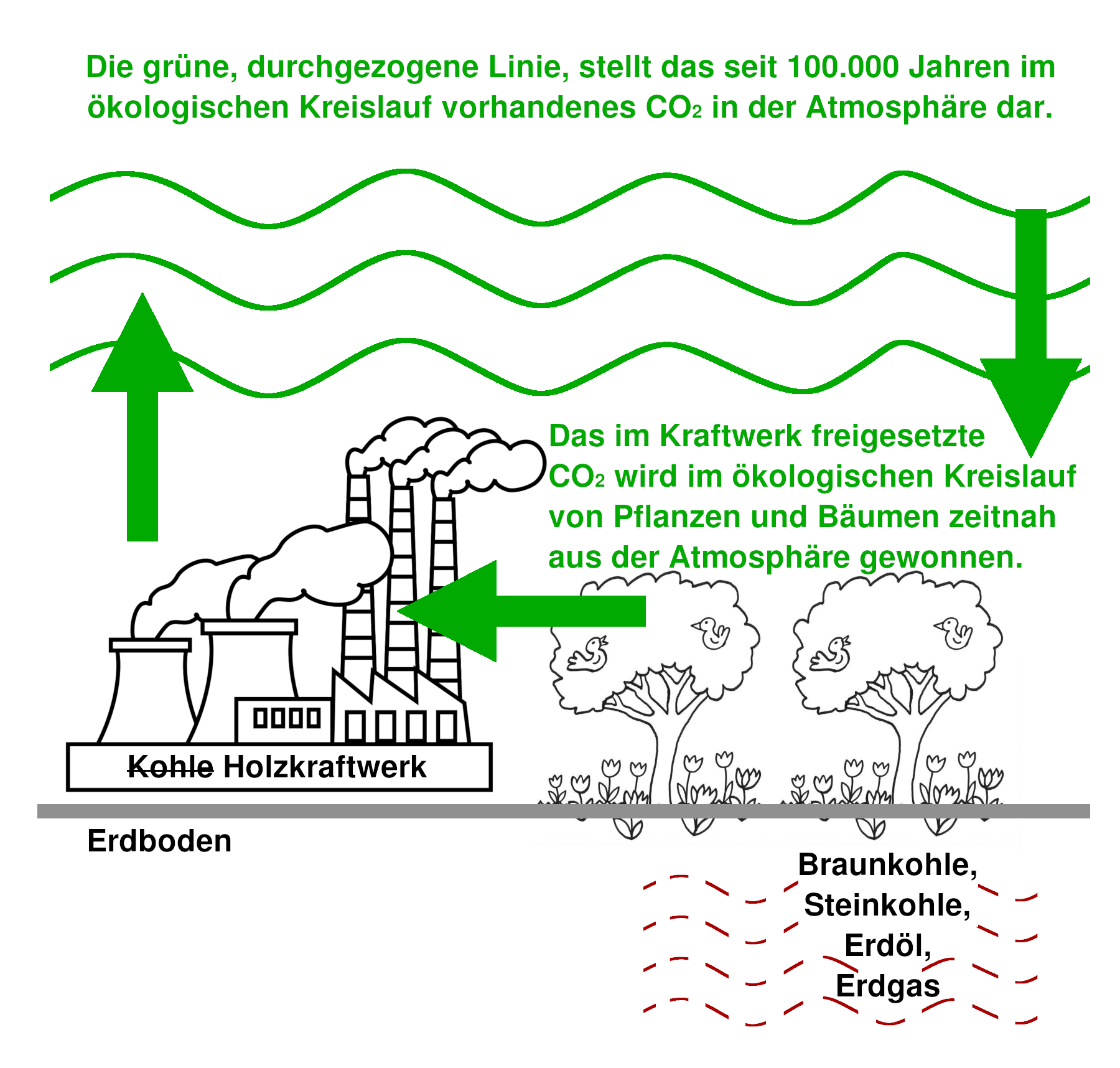
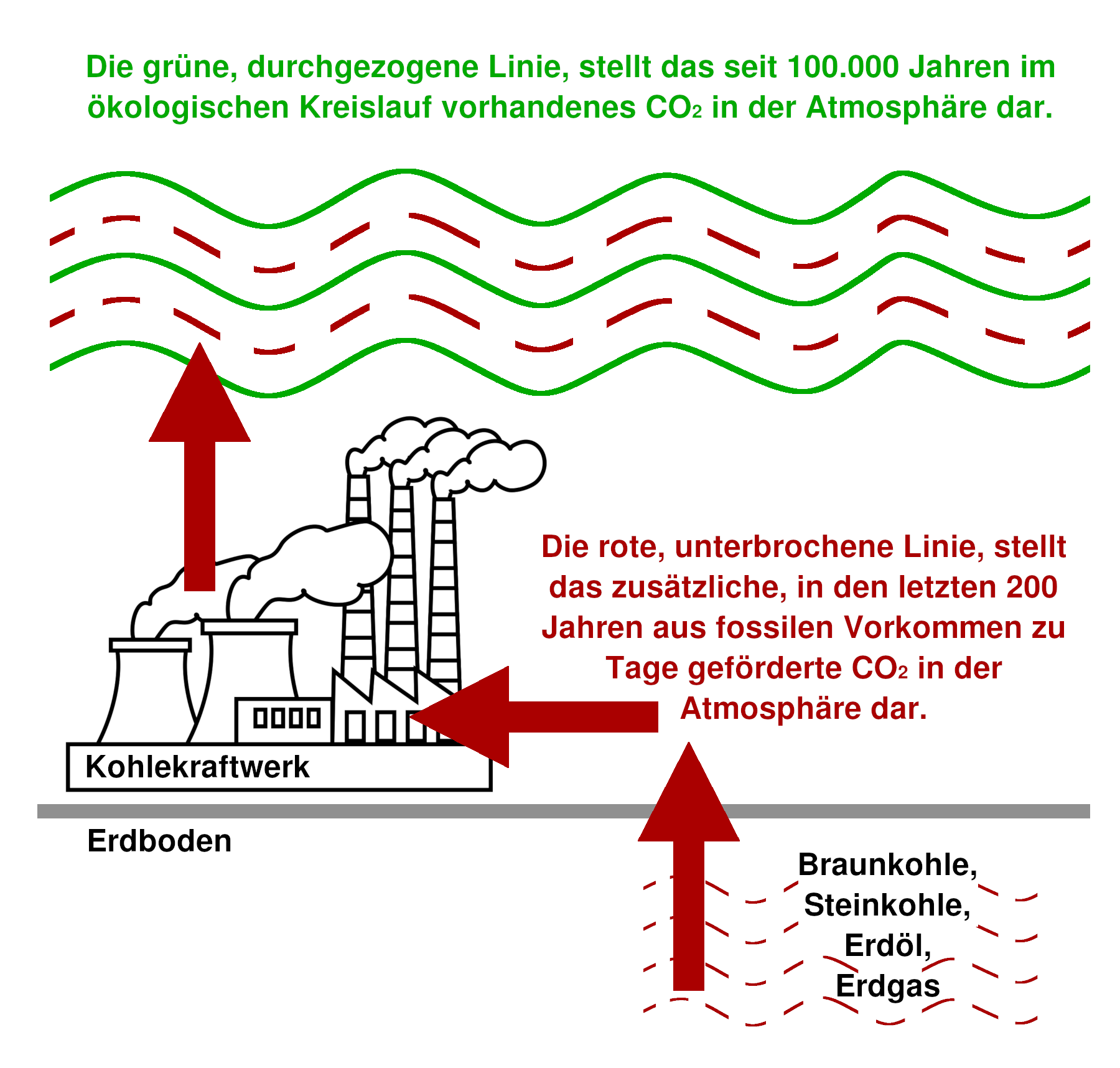
fossil != Kreislauf
Achtung: Ich meine damit nicht, dass wir mehr Holz verbrennen sollten. Ich will lediglich erklären, dass wenn ein Kraftwerk nur genausoviel Holz verbrennt, wie es auch selber in seinen eigenen Wäldern nachwachsen lässt, dass dieses Szenario dann tatsächlich CO2-Neutral ist.
Um fossilen Kohlenstoff wieder nachhaltig aus der Atmosphäre zu holen, müsste man täglich genausoviele Bäume neu einpflanzen, wie verbrannt wurden, und diese, sobald sie die entsprechende Menge Kohlenstoff in ihrem Holz aus der Luft entnommen haben, tief unter der Erde vergraben, damit der darin enthaltene Kohlenstoff nicht doch wieder in den nächsten 1.000 Jahren oder so der Atmosphäre zugeführt wird.
Anders ausgedrückt: Ein Kohlekraftwerk müsste genauso viel Kohle vergraben wie verfeuern.. was natürlich Quatsch wäre.
Was kann ich persönlich tun?
- Stelle deinen Stromlieferanten auf einen Anbieter um, der nur 100% Ökostrom verkauft und kein einziges Angebot auf Basis fossiler Energieträger anbietet.
- Prüfe Deine Anlagen und Rentenversorgung, ob diese Aktien oder Fonds beinhaltet von Firmen, die mit fossilen Energieträgern Geld verdienen (keine Kohlekraft, kein Öl, kein Erdgas).
- Lass dich nicht beirren von Kleinkrams wie Mülltrennung oder weniger Essen wegschmeissen und dergleichen. Die Priorität sollte auf der Vermeidung von fossilem CO2 liegen, so wie ein Doktor bei einem Patienten mit Herzflimmern sich nicht zuerst um den abgebrochenen Zehnagel kümmern sollte. Fossiles CO2 ist mit Abstand das Wichtigste was es zu vermeiden gilt. Die Anderen Punkte sind auch wichtig und sehr sehr schlimm, helfen aber akut nicht angemessen.
Strafanzeigen
- 20220920-einspruch-gegen-ablehung-der-beschwerde-gegen-einstellung-des-ermittlungsverfahrens-ravensburg.pdf
- 20220920-einspruch-gegen-ablehung-der-beschwerde-gegen-einstellung-des-ermittlungsverfahrens.pdf
- 20220505-beschwerde-gegen-einstellung-des-ermittlungsverfahrens.pdf
- 20220428-strafanzeige-wegen-foerderung-fossiler-brennstoffe.pdf
- 20210922-strafanzeige-wegen-foerderung-fossiler-brennstoffe.pdf
- Antwort vom 25.04.2022:Seite 1 Seite 2 sowie meine Erwiderung vom 26.04.2022
Auszug: "KEIN EINZIGER der in dieser Anzeige genannten Paragraphen trifft auf Ihre Begründung zur Einstellung des Verfahrens zu." sowie "..hätte die RWE ja einen Freifahrtsschein, der ihr alles erlaubt."
- Antwort vom 25.04.2022:Seite 1 Seite 2 sowie meine Erwiderung vom 26.04.2022
- 20210913-strafanzeige-wegen-foerderung-fossiler-brennstoffe.pdf
Weitere Informationen
- 100 Milliarden Euro damit unsere Kinder an die Front dürfen
- Ursachen & Auswirkungen der Klimakatastrophe
- Generationenvertrag gekündigt - Rentenkatastrophe
- CO2-Aussstoss im Verhältnis zur Wirtschaftsleistung
- Polizei vs. Kohlekraftwerk
- Kohlekraftwerke sind Chemiewaffen
- Kohlekraftwerke verdienen Millionen auf Kosten der Allgemeinheit
- AFD Wahlprogramm (traurige Satire)